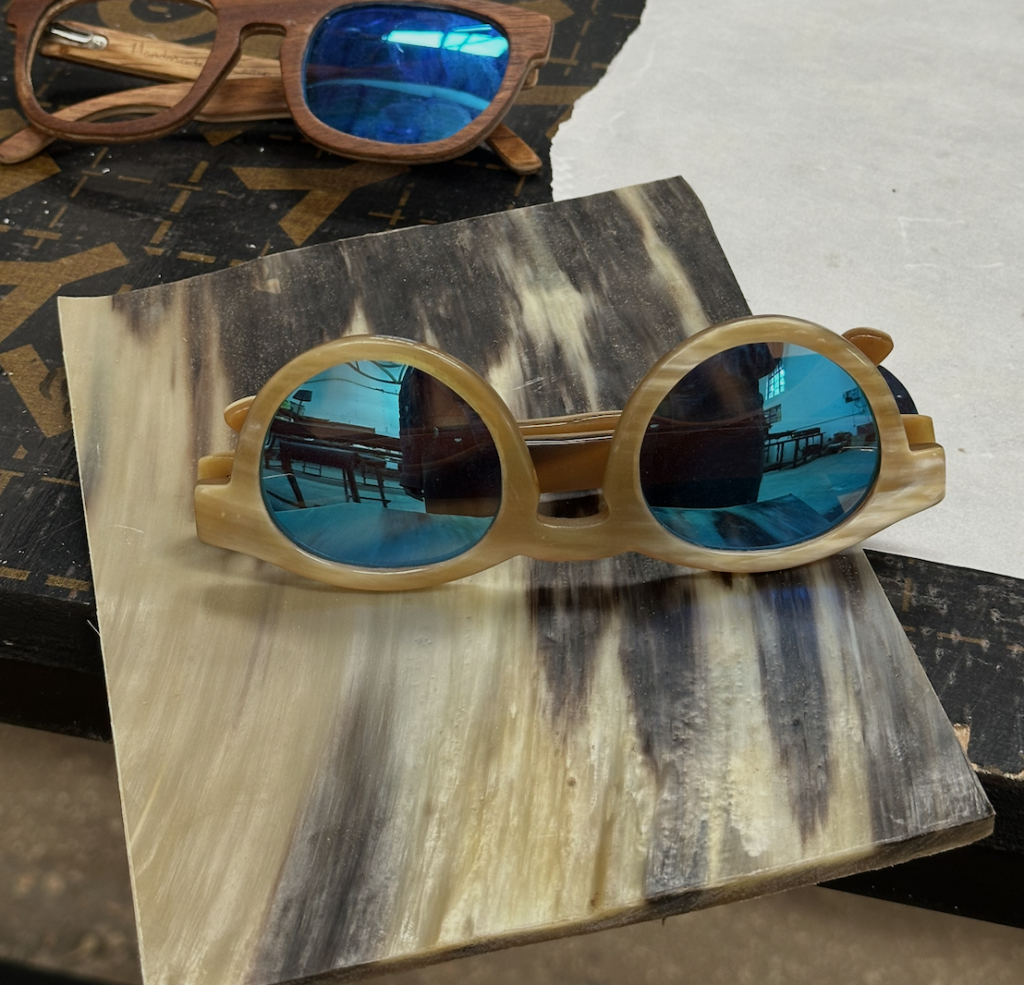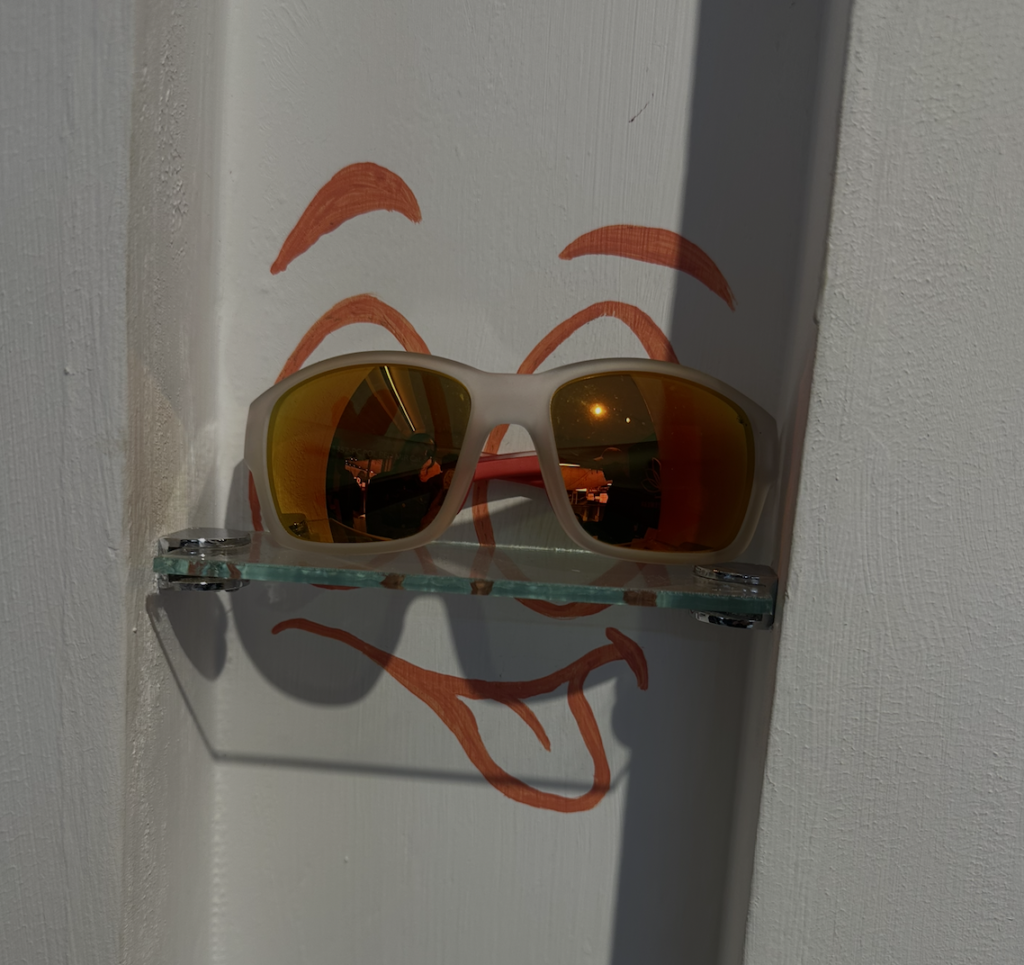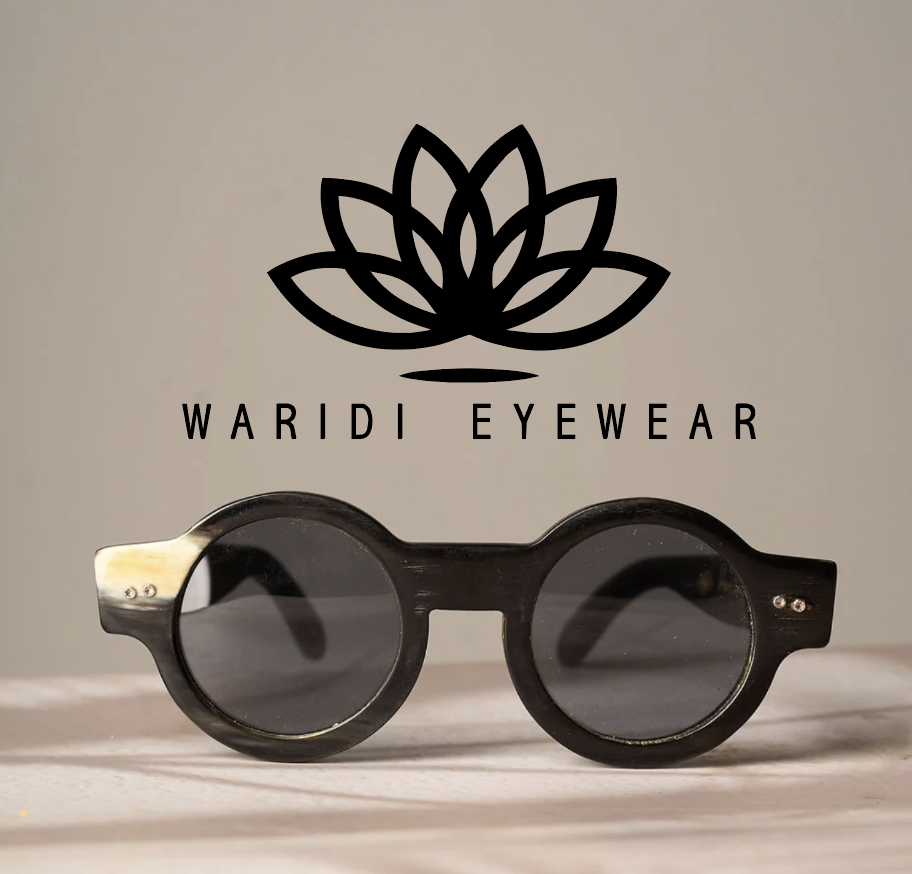
Waridi Eyewear is a Nairobi based eyewear studio founded by Lucy Kabuti. The studio uses discarded materials such as recycled wood from construction sites and cow horn from the meat industry to repurpose and reassign value to the materials through craft and design. Beyond traditional sunglasses, through the form of eyewear they experiment with different innovations that change how the wearer interacts with their environment.

Inside the lab

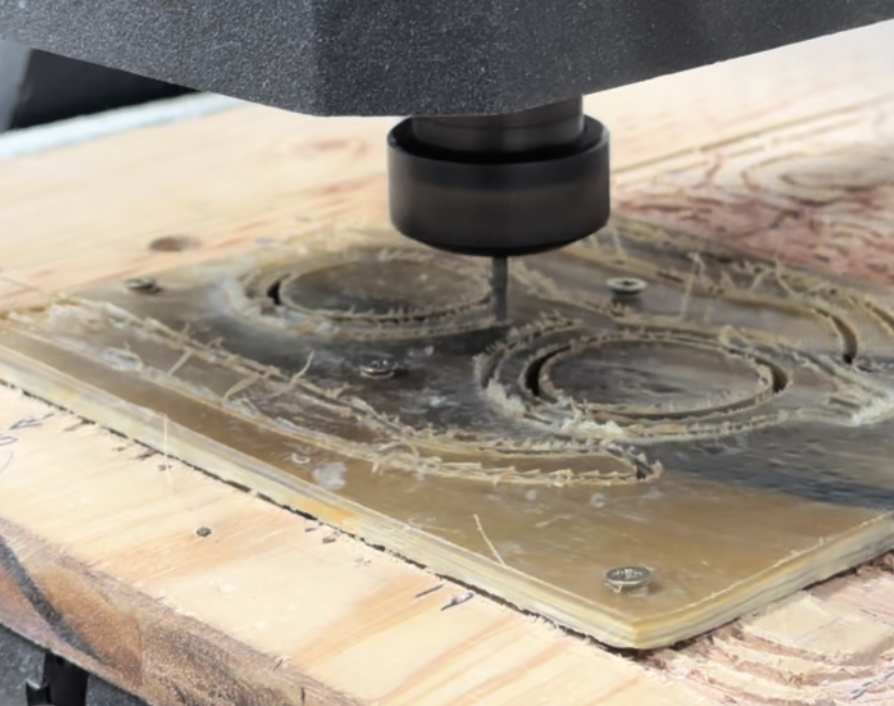
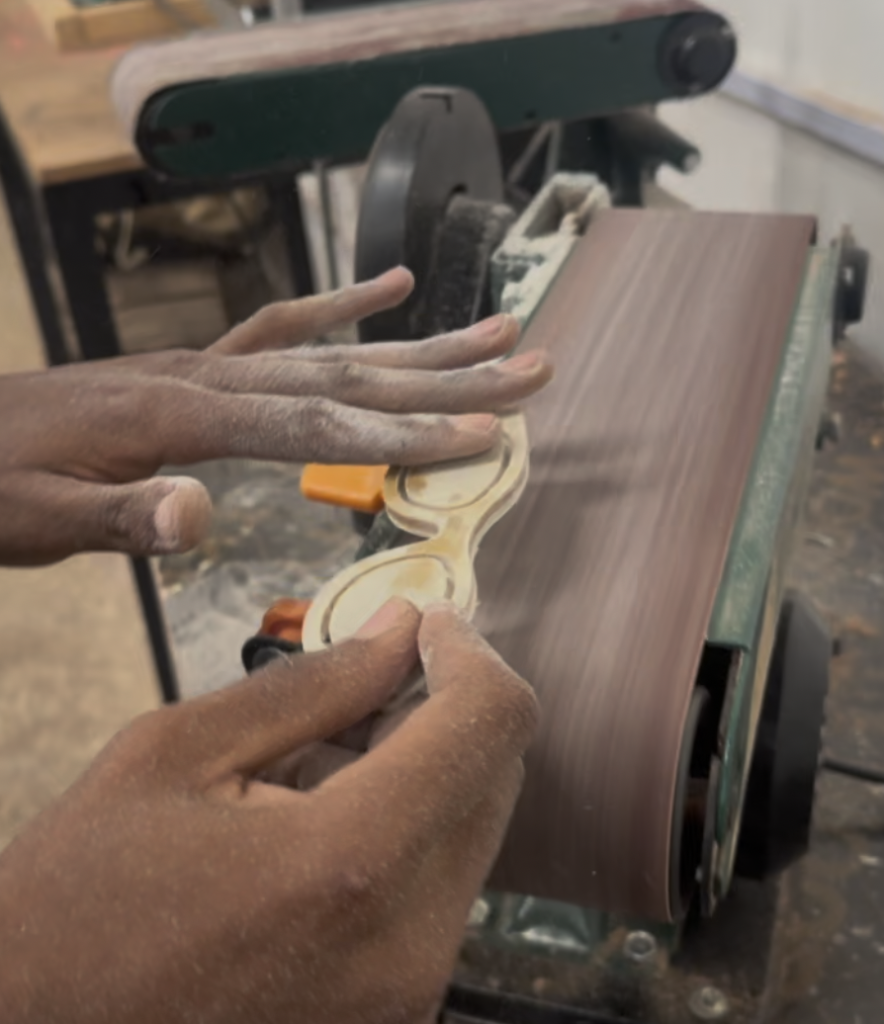
During a visit to the Lab in Nairobi I got the opportunity to observe the process of creating the sunglasses themselves. The material is first cut into the basic frame shape using a CNC machine. It is then sanded, heated and bent to create the curve of the glasses before being sanded again and engraved using a laser cutter. The lenses are individually shaped and sanded to fit the frame before the glasses are assembled, polished and finished. All materials are sourced locally as well!

(An interesting note about Cow horn)

Initially when you see a plank of cowhorn there are apparent colors and vague patterns. However, beneath the surface is somewhat unpredictable. A seemingly white and black plank could reveal shades of green and grey or be fully white. Although there are standard shades and hues that are likely to surface, it is impossible to know what exactly it will look like on the shape of the sunglasses once they have been polished and finished. Even if the same shape is repeated, the material keeps each piece unique. Waridi Eyewear works hand in hand with this variability and instead of switching to standard, predictable materials, they let the variation add to the one of a kind value of the piece.
screenshot 2026 09 22 at 11.49.01 pm
screenshot 2026 09 22 at 11.48.38 pm
Cow Horn plank
screenshot 2026 09 23 at 12.08.06 am
screenshot 2026 09 23 at 12.08.59 am

Outside the Lab

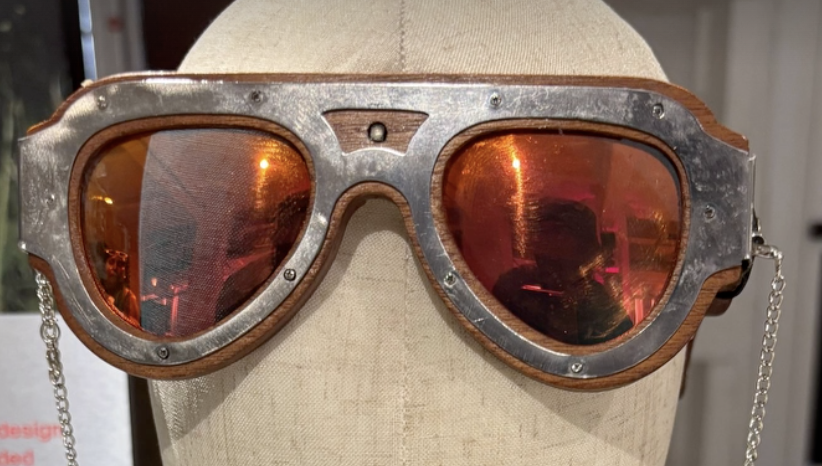
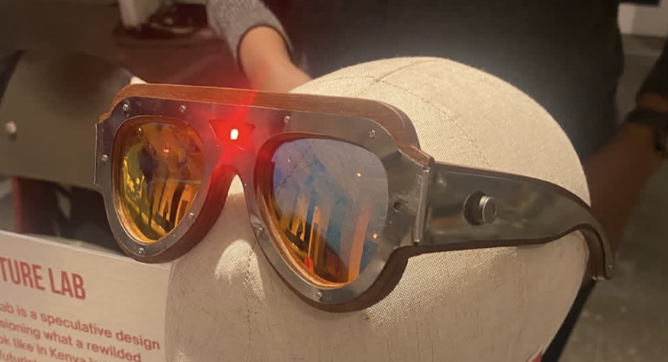
Apart from traditional sunglasses (and recently watches as well!) they created eyewear based innovations that bridge an interaction between the environment and the wearer. For Nairobi Design week, Waridi developed sunglasses for visually impaired users with embedded sensors that are inspired by echolocation principles. The sunglasses use transmitted and returned signals that estimate the distance of an object with rapid alerts for obstacles nearby. This allows the glasses to alert and inform the wearer as they move through their surroundings.

In collaboration with Kairos Futura, they worked on pollution sensing sunglasses that were displayed during Milan design week 2026 (side note: this is actually how I initially met Lucy from Waridi eyewear and Willie from Kairos Futura). Sensors within the glasses detect changes in surrounding air quality and communicate the conditions through red, amber and green lights.

Their eyewear of course protects the eyes from sunlight but simultaneously can help the wearer navigate their environment or perceive hard to see environmental conditions such as air pollution!

How it applies to Regenerative design

Regenerative design does not always mean inventing new materials or functions. It can begin by recognizing value in materials that already exist locally and finding new uses for them. It can mean working with the variation of materials and adapting to its unique properties to harness the beauty in the imperfect and to work with an understanding that the material has its own somewhat unpredictable influence on the final outcome.

This case study also pushes us to think beyond the immediate function of an object. By adding sensing technologies to something as familiar as a pair of glasses, Waridi eyewear explores how our everyday products can interact more closely with people and their surrounding environments. It expands the role a product can play within a larger system that moves beyond the isolated object.

Regeneration requires an understanding of how systems relate and influence one another. It involves looking closer at local value, whether it be materials, craft, perspectives, know-how (the list goes on..). We can use Waridi eyewear as a reminder to reconsider what resources already exist, what information an object could help us understand and how the things we design can build connections between the places and people around them.