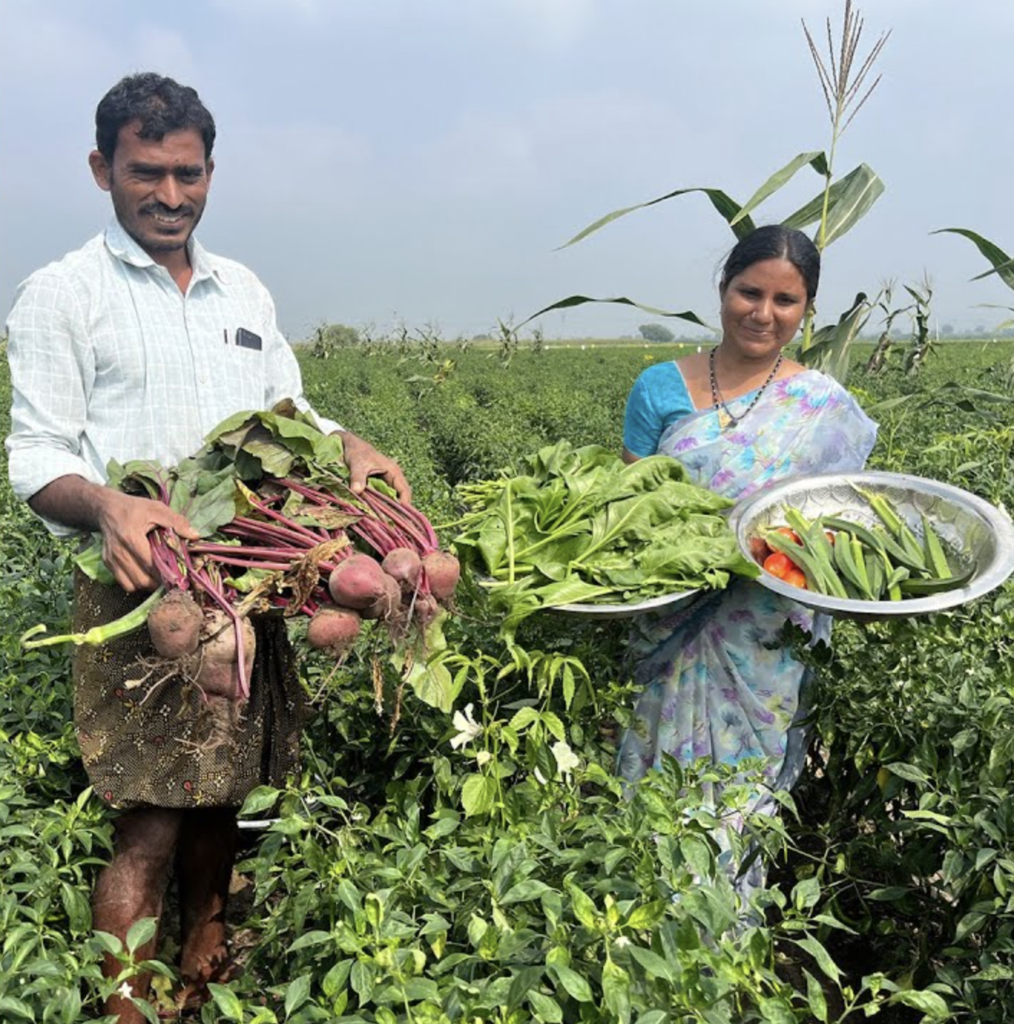
Andhra Pradesh Community-Managed Natural Farming is a large-scale program helping smallholder farmers move away from chemical-intensive agriculture and restore the health of their land. Farmers replace purchased fertilizers and pesticides with natural remedies, crop residues, ground cover and diverse planting systems that use resources available locally.
These practices increase organic matter and biological activity in the soil which helps it retain more water and nutrients. Healthier soil in turn supports stronger and more resilient crops, while planting several crops together gives families a more diverse and reliable harvest. Studies of the programme have associated this natural farming with higher yields, greater crop diversity and improved incomes for the farmers.
But the financial benefits do not come from the production output alone. Farmers also spend less on chemical inputs and become less dependent on loans, while healthier crops, reduced spoilage and more diverse harvests can create additional sources of income. This combination of lower costs and more dependable output makes farming more financially stable, especially during droughts and unpredictable weather.
A key aspect is the programme is community-managed rather than imposed only through outside experts. Experienced farmers teach neighbouring farmers, and local women’s self-help networks help organize training, share knowledge and support adoption. This strengthens relationships within villages and allows agricultural knowledge to remain in the hands of the people who use it.
This model highlights that regeneration spans beyond the health of the soil. It also rebuilds the ecological, economic and social systems surrounding farming.
Why it works
By replacing chemical processes with more natural and locally sourced treatments, it connects healthier soil with lower production costs, more resilient crops, diversified incomes and farmer-led knowledge sharing. Each part reinforces the others, allowing environmental recovery to support both household stability and stronger rural communities.